One spot, one reading
A gauge or a coin checks a single point. Uneven wear on a shoulder goes unnoticed until the tyre fails.
TyreCheq reads the tyre size off the sidewall, measures every main groove in millimetres from a short video sweep, and tells your team which tyres are fine and which to replace. No gauge, no coin, and a record for every tyre.
Worn tyres are a safety risk and a cost, yet most checks produce one number on a piece of paper, if that.
A gauge or a coin checks a single point. Uneven wear on a shoulder goes unnoticed until the tyre fails.
Readings are written on paper or not kept at all, so nobody can show what the tyre looked like last month.
Hundreds of vehicles with four or more tyres each means checks get skipped or rushed.
When a customer, a lessee or an insurer questions a replacement, there's no measured evidence to show them.
The phone guides each step. Measurement happens in the background, so the person scanning moves straight on to the next tyre.
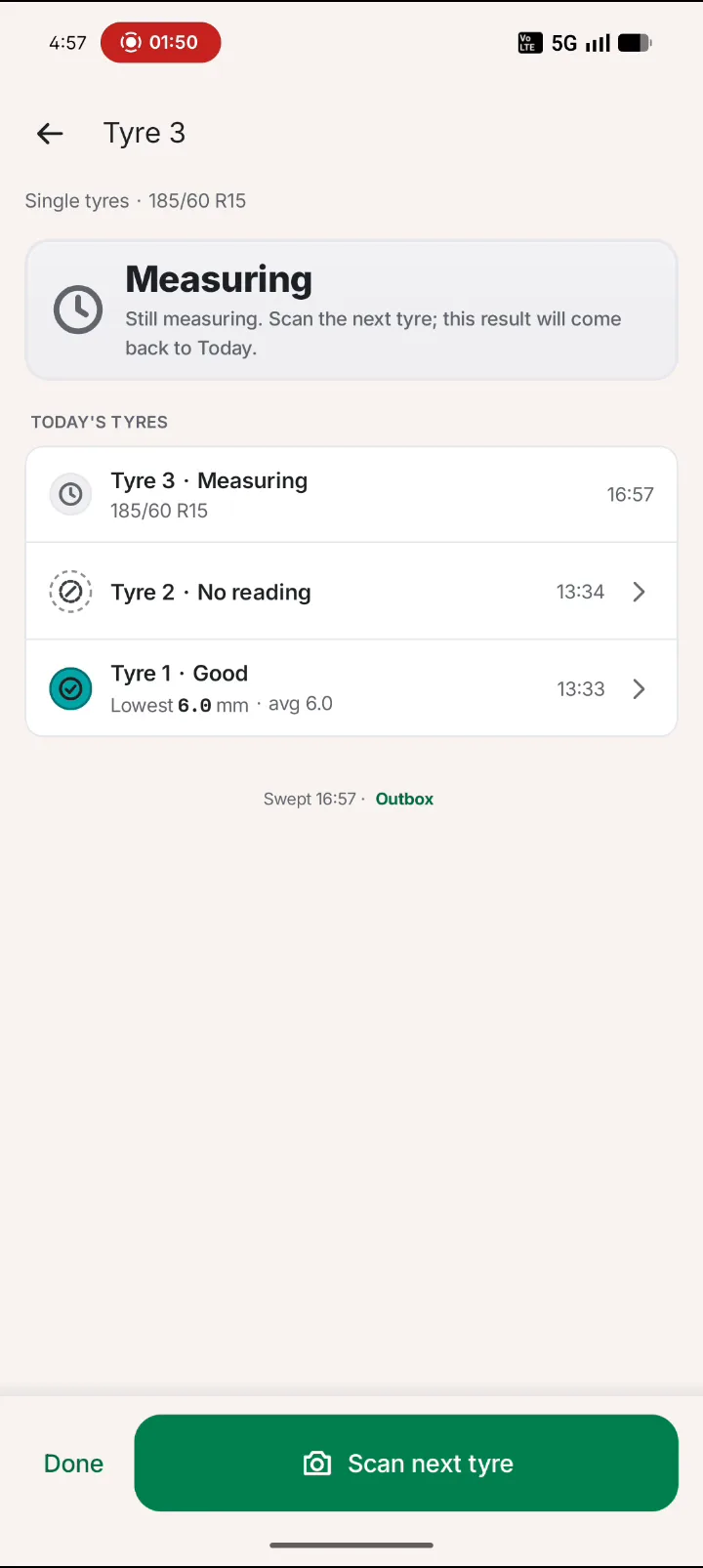
Scan a whole vehicle or loose tyres one by one. Tyres are numbered in order.
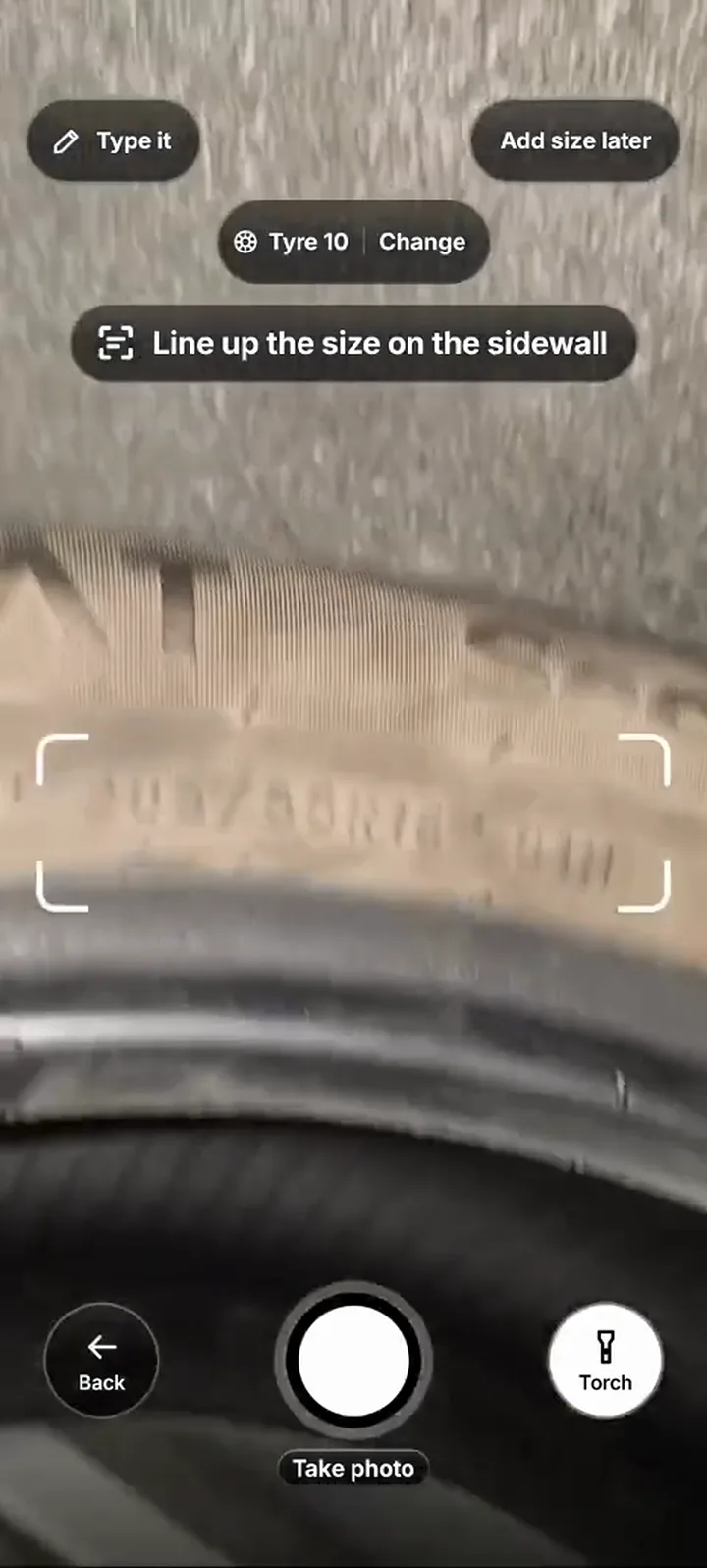
The tyre size is read from the sidewall. Type it or add it later if it's worn off; the next tyre can reuse it.
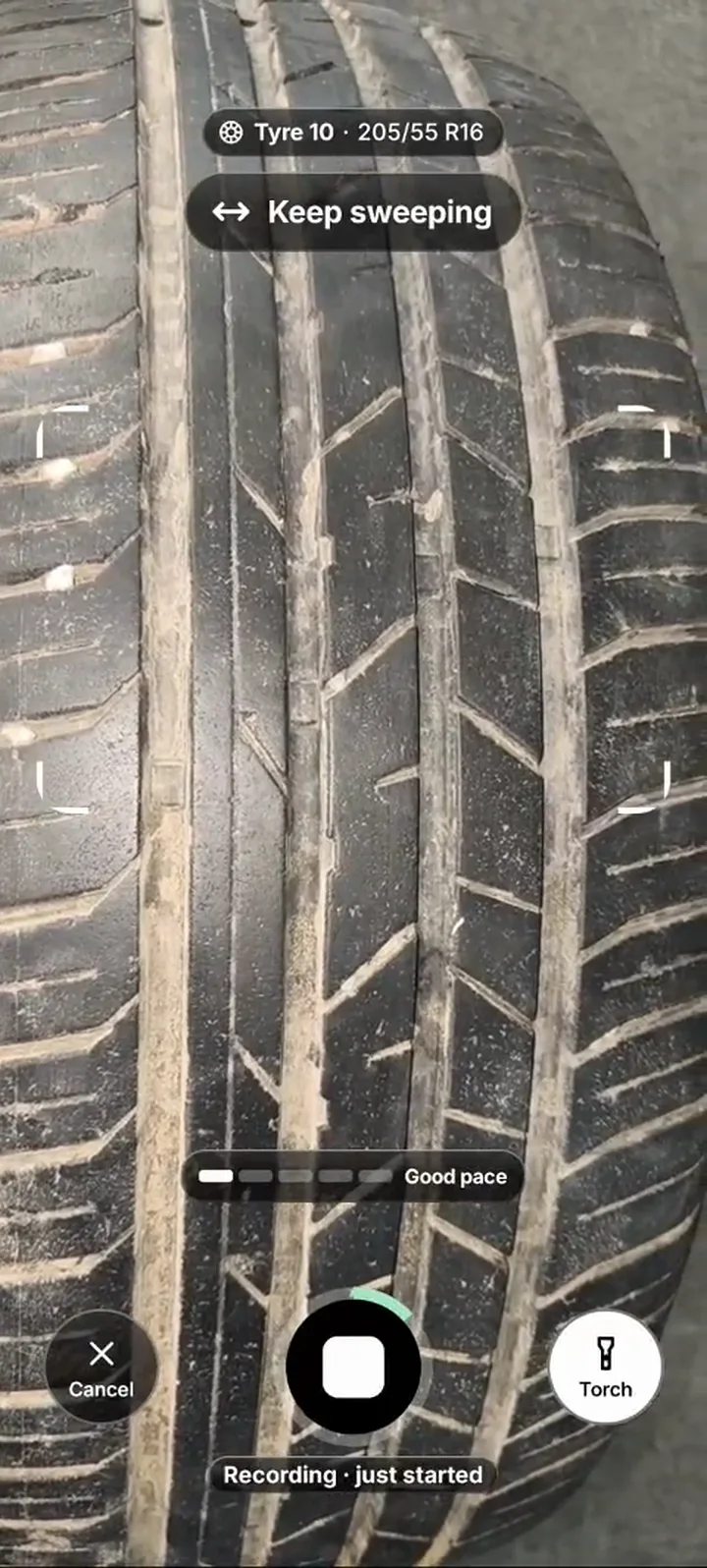
Tap, then sweep the phone along the tread. A pace bar keeps the sweep steady, and the torch helps in low light.
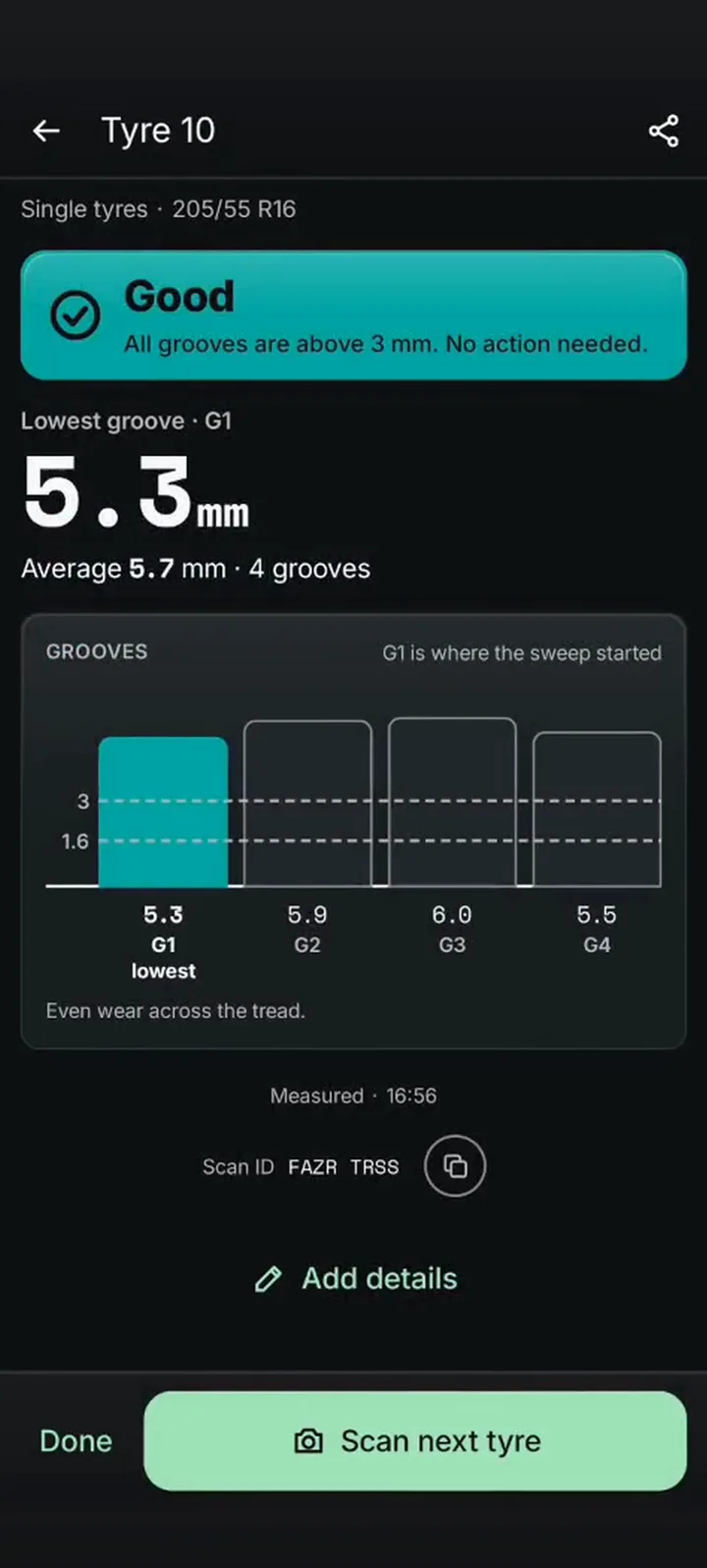
The lowest groove, the average, a bar per groove and a clear status, saved with a scan ID.
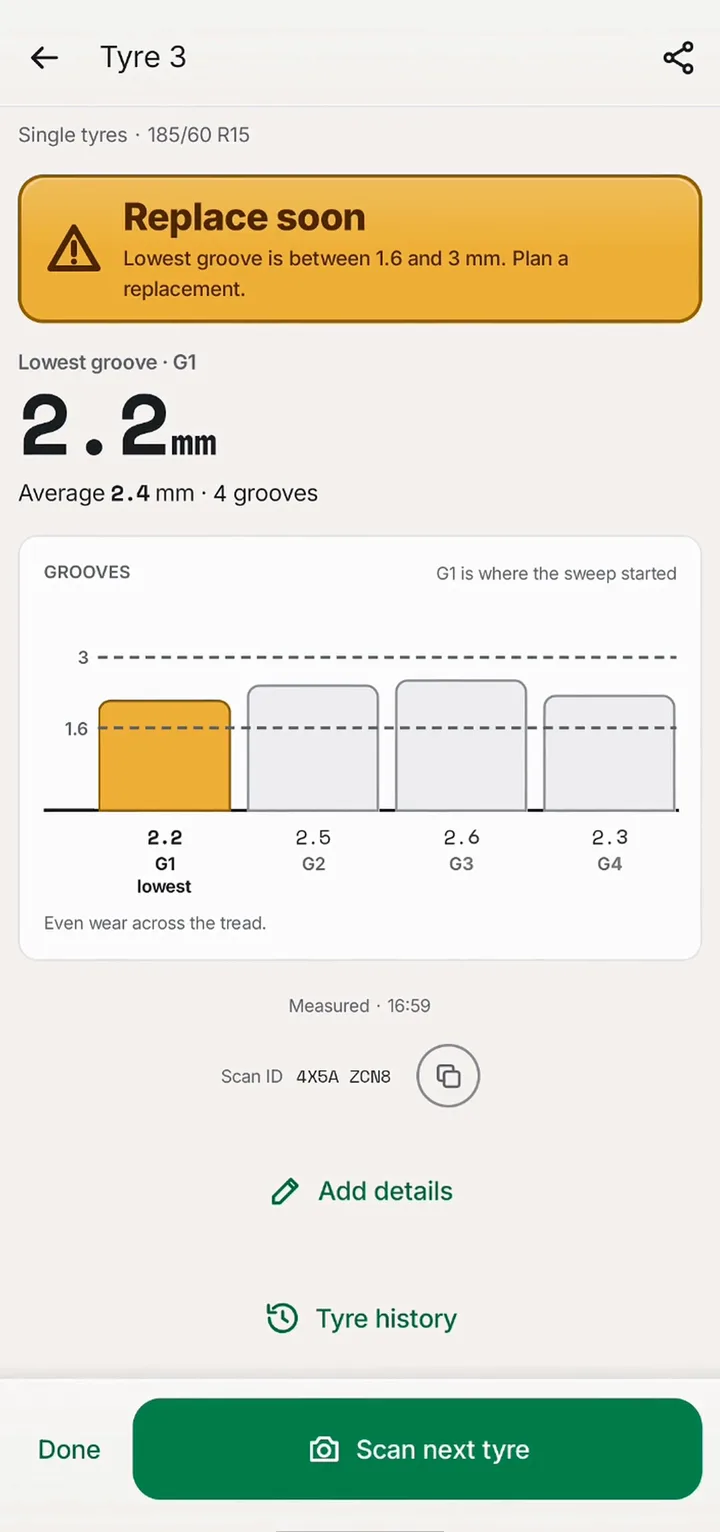
The lowest groove decides the status, because that's where the tyre will fail first.
All grooves are above 3 mm. No action needed.
The lowest groove is between 1.6 and 3 mm. Plan a replacement.
1.6 mm is the legal minimum in many countries. Check the rule where you operate.
Each main groove gets its own bar, numbered from where the sweep started, so uneven wear shows up at a glance: one low shoulder often points to alignment or pressure.
Two real scans recorded in the field: one tyre in good shape, one that needs replacing soon.
Each sweep is saved on the phone first, then uploaded and measured in the background. Results come back to the Today screen with a notification.
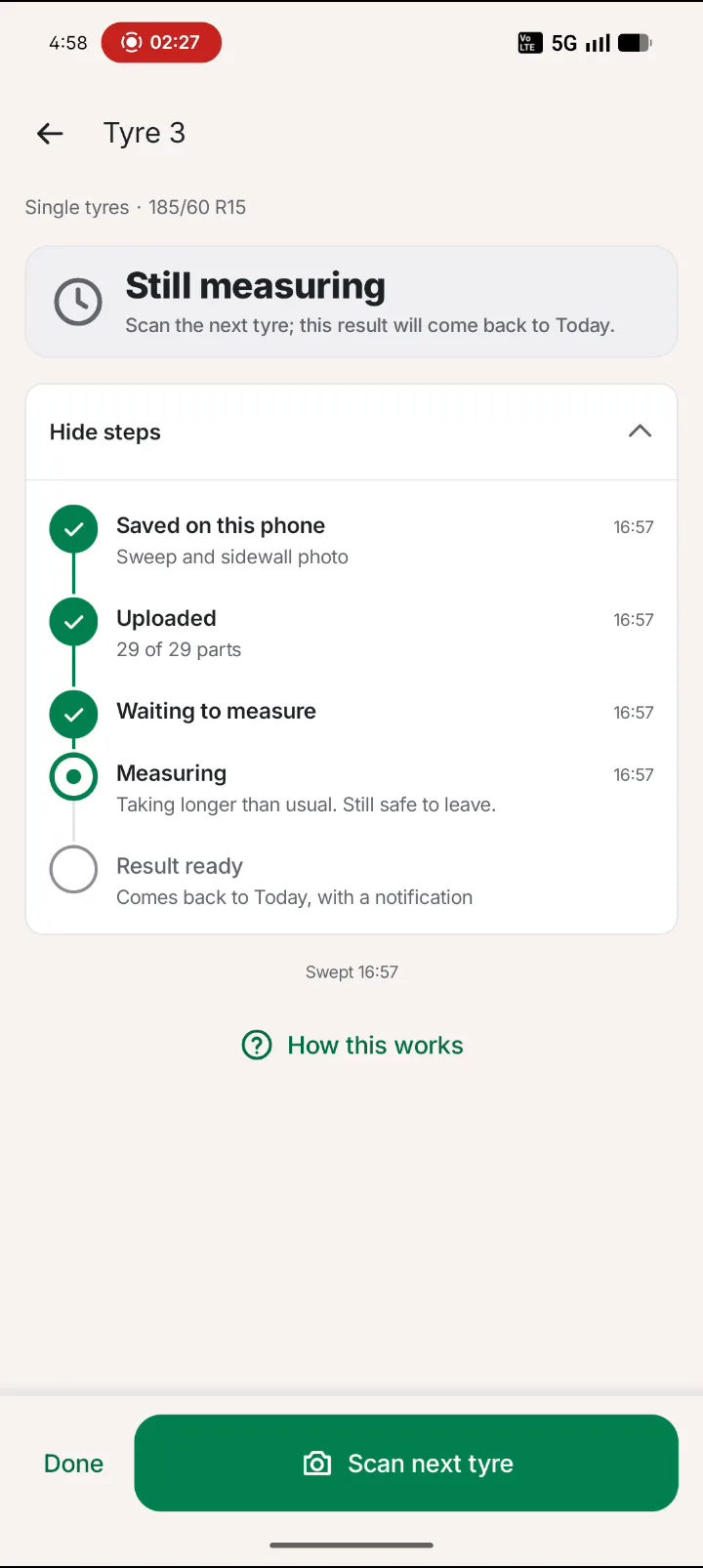
Scan a car tyre by tyre, or check stacks of loose tyres numbered 1, 2, 3.
Matching tyres reuse the size, so the sidewall step takes a tap.
Everything measured today in one list, with history per tyre for later checks.
Every result carries a scan ID, can take extra details and can be shared with a customer or colleague.
Each scan records the person scanning, their location and the time it was measured.
Check every vehicle on the same standard, see which tyres are nearing 3 mm, and plan replacements before they become breakdowns.
Read the fleet scenario → Walk-in checks · replacement quotesShow the customer each groove's depth on screen. A measured result makes a replacement recommendation easy to trust.
Read the retail scenario → Pre-inspection · claimsRecord tyre condition before cover starts and at claim time, with the measurement and scan time on file.
Talk to us about insurance → Handover · returnMeasure tread at handover and return so wear charges rest on numbers, not opinion.
Read the leasing scenario → Trade-in · listingPrice trade-ins with real tread figures and add them to listings buyers can trust.
Talk to us about used cars → Service visitsAdd a measured tread check to every service, and spot uneven wear that points to alignment or pressure.
Talk to us about workshops →Depot staff scan every vehicle at the start of the month. The shift summary shows what's done; tyres marked Replace soon go on next month's budget.
At the counter, a technician sweeps each tyre and shares the result. The customer sees the lowest groove at 2.2 mm instead of being told the tyre "looks worn".
The lessor measures tread at handover and again at return. Any wear charge refers to two dated scans of the same tyre.
Scenarios are illustrative. Customer stories will follow our first pilots.
AutoCheq guides a full vehicle inspection from a link, checks every photo, reads the VIN and plate, and marks damage with AI. Use it with TyreCheq for one record of the vehicle and its tyres.
Explore AutoCheq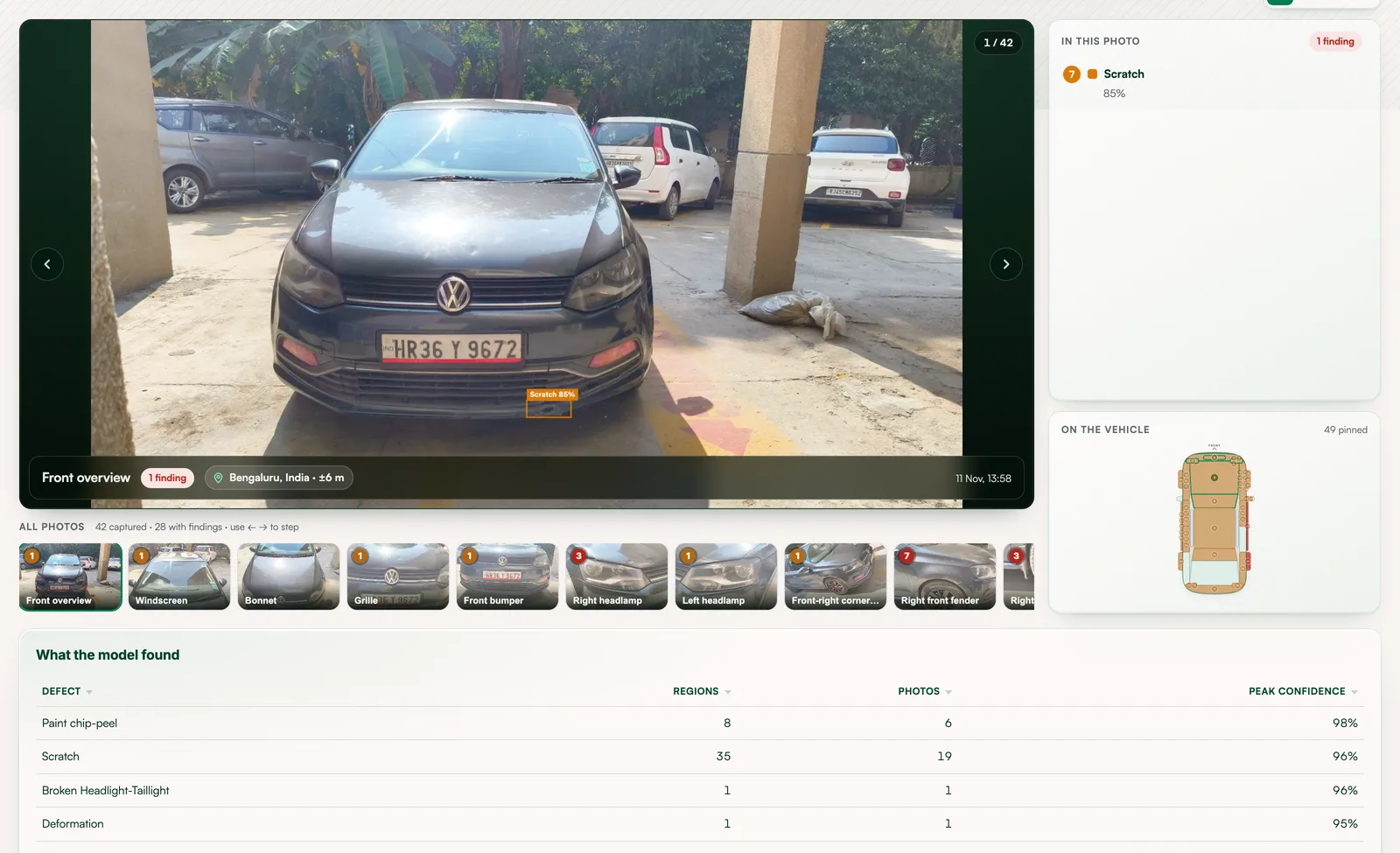
TyreCheq is a tyre tread depth measurement tool by Devkraft. A phone sweep along the tread gives each main groove's depth in millimetres, the tyre size from the sidewall, and a Good or Replace soon result.
TyreCheq is a tyre tread depth measurement tool by Devkraft. You sweep a phone along the tyre's tread and it measures every main groove in millimetres, reads the tyre size from the sidewall, and tells you whether the tyre is Good or should be replaced soon.
Pick the tyre, photograph the sidewall so the size is read, then tap and sweep the phone along the tread while it records. The app guides your pace. TyreCheq measures each groove and returns the lowest groove, the average and a status.
TyreCheq marks a tyre Good when every groove is above 3 mm and Replace soon when the lowest groove is between 1.6 and 3 mm. 1.6 mm is the legal minimum in many countries, including across the EU and the UK; check the rule that applies where you operate.
Tyres often wear unevenly, for example on one shoulder when alignment or pressure is off. A single gauge reading can miss the lowest groove. TyreCheq reports each main groove, so the lowest one decides the result and uneven wear is visible.
Yes. Each sweep is saved on the phone first and uploads in the background. You can scan the next tyre while earlier ones are measured; results come back to the Today screen with a notification.
Fleet operators, tyre dealers and service centres, motor insurers, leasing and rental companies, used-car dealers and vehicle logistics firms.
Yes. Both are built by Devkraft. AutoCheq covers the vehicle's condition and identity; TyreCheq adds measured tread depth for each tyre.
Tell us how many tyres you check and how. We'll show TyreCheq on a live tyre and scope a pilot with your team.
Prefer email? vendor@devkraft.in